




The First Difference: Patient Simulation Type
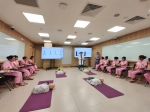
CPR manikins are designed for different patient groups, commonly including:
- Adult manikins
- Child manikins
- Infant manikins
Each type is designed with different anatomical structures, chest resistance, and compression force requirements to match real-life patients. Therefore, selecting the appropriate model is essential for effective training.
For example, basic CPR training courses for companies or communities often use adult manikins, while pediatric emergency training requires child or infant models to ensure realistic practice.
Feedback Capabilities During CPR Training
Not all CPR manikins are limited to chest compressions and ventilation practice. Modern manikins are increasingly integrated with feedback technologies to help learners improve their CPR performance more accurately.
Basic CPR Manikins
These are commonly used in basic training programs due to their affordability and ease of use. They mainly support chest compression, airway opening, and ventilation practice.
CPR Manikins with Electronic Feedback
More advanced models can provide real-time feedback on:
- Compression depth
- Compression rate
- Chest recoil
- Ventilation quality
This allows learners to immediately adjust their technique during practice instead of relying solely on subjective evaluation.
Advanced Simulation Manikins
These systems are typically used in medical simulation centers and large hospitals. In addition to CPR feedback, they may also support:
- Training software connectivity
- Real-time performance monitoring
- AED training integration
- Various clinical simulation scenarios
Such features significantly enhance the learning experience and enable more objective skill assessment.
Increasing Importance of Realistic Simulation
Another important factor is the realism of the manikin. High-end models are designed with anatomical features that closely resemble real patients to improve training effectiveness.
Commonly valued features include:
- Realistic chest compression feel
- Proper head tilt and chin lift functionality
- Anatomically accurate airway structures
- Natural chest elasticity
The more realistic the simulation, the better learners can retain skills and develop practical response reflexes.
QCPR Technology – A Growing Trend in Modern CPR Training
In recent years, QCPR feedback technology has become an important trend in CPR education.
This system enables:
- Real-time CPR performance monitoring
- Objective learner assessment
- Better instructor guidance
- Improved interaction and training efficiency
Many training centers now prioritize QCPR-enabled manikins to meet modern CPR training standards and improve overall training quality.
Choosing the Right CPR Manikin for Training Needs
Each type of manikin is designed for different training purposes. Before investing, organizations should carefully consider:
- Class size
- Target learners
- Training level
- Skill assessment requirements
- Future scalability
For large-scale basic CPR courses, standard manikins may already meet the training needs effectively. Meanwhile, medical universities, hospitals, and simulation centers often prefer solutions with electronic feedback and integrated training management systems.
CPR Simulation Solutions from Laerdal Medical
In the field of medical simulation training, Laerdal Medical is one of the world’s most widely recognized brands, offering a wide range of CPR manikins for various educational needs.
Laerdal’s solutions are designed to support:
- Community CPR training
- Healthcare professional training
- Clinical simulation
- Advanced resuscitation education
Some commonly used models include:
- Little Anne QCPR
- Resusci Anne QCPR
- Resusci Junior
- Little Baby QCPR
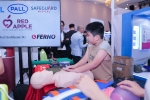
In Vietnam, Red Apple is currently a distributor and provider of training simulation solutions from Laerdal Medical, supporting hospitals, universities, and training centers in implementing CPR and medical simulation training systems.
With experience in medical equipment and healthcare simulation, Red Apple provides training solutions tailored to practical educational needs while also offering technical consultation, user guidance, and after-sales support services.